
Finding Aloha at the Bottom of the Grand Canyon
By Sara Layne Pedro, RB-22770
Principal Broker, LUVA Real Estate
A Journey Down the Colorado River that reminded me what it means to care for a place, and why I hope everyone who visits Hawaiʻi feels the same.
Twenty-one women. Two rafts. Nearly 200 miles down the Colorado River. One unforgettable birthday celebration for one of my dearest friends.
When I accepted the invitation to raft through the Grand Canyon, I expected breathtaking scenery, exhilarating rapids, and an adventure unlike anything I had ever experienced. What I didn’t expect was that nearly every day, my thoughts would drift back to Hawaiʻi.
From the moment we launched, our guides immersed us in the principles of Leave No Trace. It wasn’t presented as a list of rules or regulations. It was simply the way things were done. Every campsite, every beach, every side canyon reminded us that we were temporary guests in one of the world’s most extraordinary places. Our responsibility wasn’t to leave our mark, it was to leave no evidence that we’d ever been there at all.
As I listened throughout the trip, I realized something.
This wasn’t a new way of thinking for me.
It was a reminder of why I fell in love with Hawaiʻi in the first place.
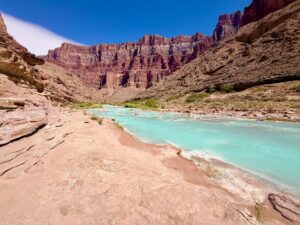
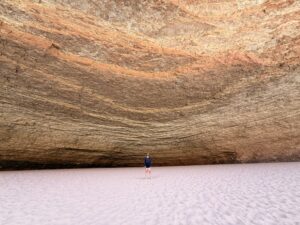
The Grand Canyon is impossible to truly understand until you’re living inside it. Standing on the rim is breathtaking, but descending into its depths is something entirely different. Towering walls of ancient marble, sandstone, and shale reveal nearly two billion years of Earth’s history. The scale is humbling. The silence is powerful. You quickly realize how small you are in comparison to the landscape surrounding you.
The environment itself demands respect.
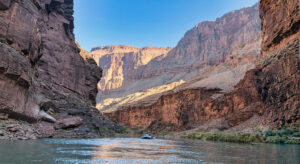
Every day challenged me physically. The desert heat was relentless. The hikes were steep and unforgiving. Sand found its way into every piece of clothing I owned. We slept beneath endless stars, carried only what we needed, and trusted our guides, and each other, through every rapid.
Every evening I crawled into my sleeping bag completely exhausted, wondering how I could possibly do it all again the next day.
And every morning, I did.
It was the most physically demanding environment I’ve ever experienced.
And I would go back tomorrow.
Not because it was easy, but because the places that challenge us often become the places that change us.
The Canyon wasn’t the only thing that transformed me.
Living alongside twenty-one incredible women for nearly two weeks created a bond unlike anything I’ve experienced before. Without our normal routines, phones, schedules, or distractions, we became fully present; with the river, with ourselves, and with one another.
We celebrated victories, laughed until we cried, encouraged one another through difficult moments, and ended each day sitting beneath one of the most spectacular night skies I’ve ever seen.
Somewhere between the rapids and the rocks, strangers became lifelong friends.
As I reflected on why this journey affected me so deeply, I realized I’d experienced this feeling once before.
I was a teenager on my very first trip to Hawaiʻi.
I remember standing atop Haleakalā before sunrise, watching the sky slowly come alive above a sea of clouds. I remember snorkeling the crystal-clear waters of Molokini, amazed by the vibrant life beneath the surface. I remember driving the Road to Hāna while waterfalls poured down emerald cliffs and rainbows appeared around nearly every bend.
Those weren’t simply beautiful moments.
They created a connection.
Long before I ever imagined living here, Hawaiʻi captured my heart.
Years later, it became my home.
I moved to the Big Island when I was twenty years old, where I met and married my husband, who is Hawaiian and Tokelauan. Through him, his family, and the years we’ve spent raising our own family here, my appreciation for these islands has only deepened. Hawaiʻi isn’t simply where I live, it’s home.
Since then, my family has tried to live with that same sense of respect whenever we explore these islands. Whether we’re camping on a secluded beach, hiking through native forests, or spending time in places we love, we’ve always believed in leaving them just as beautiful as we found them. It’s never felt like an obligation. It simply feels like the right thing to do when you love a place.
The Grand Canyon didn’t teach me that.
It reminded me why.
What struck me wasn’t simply the Leave No Trace philosophy itself. It was how intentionally it was woven into the entire experience. Every person on that river understood they shared responsibility for protecting something far bigger than themselves.
As I floated down the Colorado River, I couldn’t help but think about Hawaiʻi.
I found myself wishing every visitor and every newcomer who chooses to call these islands home could experience that same feeling.
Because the best way to protect a place isn’t by handing someone a list of rules.
It’s by helping them fall in love with it first.
When you watch the sunrise from Mauna Kea…
When you swim alongside sea turtles while giving them the respectful distance they deserve…
When you hear the power of the ocean crashing against the cliffs on the Hāmākua Coast…
When you stand beneath towering ʻōhiʻa forests or watch lava meet the sea…
You begin to understand that these aren’t simply attractions.
They’re living places with history, culture, and meaning.
In Hawaiʻi, we often hear the word aloha. While many know it as a greeting, I’ve come to appreciate it as something much deeper. Aloha is reflected in how we treat one another, how we show gratitude, and how we care for the places that care for us.
Closely connected is the Hawaiian value of mālama ʻāina, to care for and protect the land. It’s a relationship built not on ownership, but on gratitude and responsibility.
Leave No Trace and mālama ʻāina come from different traditions, but they share a common truth.
Extraordinary places deserve extraordinary care.
That care can be simple.
Stay on marked trails.
Pack out what you bring in.
Leave lava rocks, coral, shells, and plants where they belong.
Respect sacred and cultural places.
Use reef-safe sunscreen.
Support local businesses and communities.
Take time to learn the stories behind the places you’re visiting.
Most importantly, remember that Hawaiʻi isn’t just a destination.
It’s someone’s home.
Perhaps the greatest lesson I brought home from the Grand Canyon wasn’t about rafting.
It was about gratitude.
Gratitude for landscapes that humble us.
Gratitude for friendships formed through shared challenges.
Gratitude for adventures that remind us how small we are in the best possible way.
And gratitude for the opportunity to care for places that have given us so much.
The Grand Canyon reminded me that the world’s greatest treasures don’t belong to us.
For a brief moment, they simply allow us to experience them.
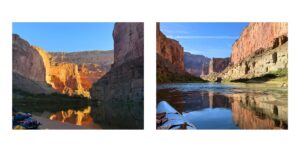
Whether you’re floating through the Grand Canyon or watching the sunrise from Mauna Kea, we’re all temporary caretakers.
My hope is that everyone who visits Hawaiʻi leaves with the same feeling I carried home from the Colorado River, not simply memories of an incredible place, but a desire to protect it so that generations after us can experience the very same sense of wonder.
Because people naturally care for the places they love.
And that’s what aloha has always reminded me.
Has somewhere you’ve traveled ever taught you something about life in Hawaiʻi, or reminded you what to appreciate about this special place? LUVA Real Estate would love to hear your story.
Reach out to Sara Layne Pedro at sara@luvarealestate.com to share your experience!